
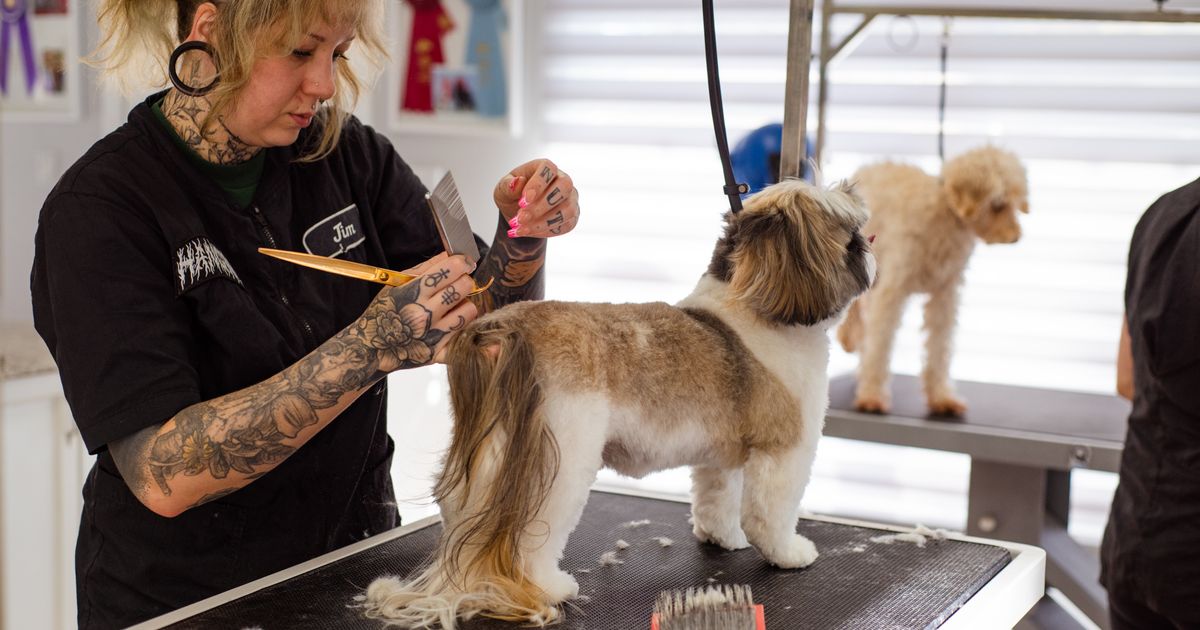
Top Concentrated Dog Shampoos with the Best Dilution Ratios for High-Volume Salons
The professional pet grooming industry in the United States generates over $12 billion in annual revenue, with product costs representing 15–25% of a salon's total operating expenses (IBISWorld, 2024). Despite this, most salon operators still choose shampoo by scent or brand recognition rather than by dilution efficiency — leaving significant profit on the table every single working day.
This guide breaks down the six most critical categories of concentrated dog shampoo for professional use, evaluates their real-world dilution performance with formulation-level precision, and equips high-volume salon operators to make purchasing decisions grounded in measurable cost-per-groom economics rather than marketing claims.
- Concentrated shampoos at 50:1+ ratios can reduce per-groom product cost to under $0.10, compared to $0.50–$1.20 for ready-to-use retail formulas
- Dilution ratio alone doesn't predict salon yield — surfactant type, water hardness, and temperature all affect real-world performance
- pH stability at working dilution (target 6.5–7.5 for canine skin) is a non-negotiable quality marker that many budget concentrates fail to maintain
- Calibrated wall-mount proportioners in high-volume environments can recover the equivalent of one "free" gallon per 22 dispensed by eliminating staff dilution variability
Why Dilution Ratio Is the Most Overlooked Profit Lever in Professional Grooming

In 2024, IBISWorld reported the U.S. pet grooming services market at approximately $12.3 billion — with product costs ranking as the second-largest controllable expense after labor. Yet most salon operators still evaluate shampoo by fragrance or familiarity rather than yield efficiency. The arithmetic of concentrated formulas is compelling, but the discipline to apply it consistently is what separates profitable operations from margin-squeezed ones.
Consider a direct comparison. A ready-to-use formula priced at $20 for 32 oz yields approximately 32 grooms at 1 oz per application. A concentrated formula at $35 for 32 oz with a 64:1 dilution ratio yields 2,048 oz of working solution — enough for 2,048 grooms at the same application volume. That is a cost reduction of over 98% per groom for a product that costs only 75% more at the shelf.
What prevents many salons from capturing this efficiency is a systemic misunderstanding of real-world dilution yield. On-label ratios are measured under controlled lab conditions: temperature-regulated water (typically 100°F), a standardized coat volume, and a fixed lather time. Real salon conditions — cold municipal plumbing in winter, dense double coats, rushed rinse cycles — consistently reduce effective yield by 15–30%.
The practical correction: budget label ratios at 80% of stated yield when projecting per-groom costs. A product claiming 64:1 should be modeled at an effective 51:1. This conservative baseline eliminates cost overruns and gives you a defensible floor when comparing supplier proposals.
How to Read Dilution Ratios — What the Numbers Actually Mean for Salon Use
Dilution ratios express parts water to parts concentrate. A 30:1 ratio means 30 parts water to 1 part shampoo, yielding a total solution volume 31 times the concentrate — not 30 times, as is frequently miscalculated. This one-part difference has a compounding effect at scale: a 1-gallon concentrate at 30:1 yields 3,968 oz of working solution; at 64:1, it yields 8,320 oz. Correct arithmetic is the foundation of accurate cost-per-groom modeling.
Three parameters to verify before committing to any concentrated shampoo purchase:
- pH at working dilution. Always request or independently test pH at the recommended working ratio. The target for canine skin is 6.5–7.5. Products that are pH-balanced at full strength often drift outside this window when diluted to 50:1 or higher.
- Foam stability at your actual water hardness. Request test samples and assess lather against your tap water — not the supplier's lab conditions. Hard-water salons (>150 ppm) should look for chelating agents (EDTA, citric acid) listed in the formula.
- Fragrance retention at dilution. Some fragrance compounds volatilize faster than the surfactant system at high dilution, leaving coats smelling flat post-dry. A fresh-smell finish is a client-retention variable your per-groom cost math should also factor in.
#1 — Ultra-High-Concentration Degreaser Shampoos 50:1 – 100:1

Degreaser concentrates are the workhorses of high-volume salon use. They are purpose-built for high-sebum breeds — Labrador Retrievers, Basset Hounds, Cocker Spaniels, and double-coated herding breeds — where sebum and environmental grease accumulate deep within the undercoat. Formulas in this category rely primarily on anionic surfactants (sodium laureth sulfate or sodium lauryl sulfate) combined with enzymatic lipid-breakdown agents.
Key formulation markers for salon viability:
- Surfactant concentration: Look for 15–30% active surfactant mass in the concentrate. Below 12% active matter, the formula underperforms at 50:1+ ratios in hard water or on dense coat types.
- Enzyme stability: Protease and lipase enzymes should remain active at 100°F. Heat-labile enzyme systems lose efficacy during warm-water rinse stages — a common performance shortfall in lower-grade concentrates.
- Rinse efficiency: Evaluate foam collapse speed post-application. Faster foam collapse means fewer rinse passes and lower water consumption per groom — an operational efficiency metric that is easily overlooked but adds up across hundreds of daily grooms.
Dual-dilution protocol for heavily soiled dogs: Many premium degreaser concentrates support a two-stage approach — a first pass at 30:1–40:1 for heavy soil removal, followed by a finishing bath at 64:1–80:1. This protocol consistently outperforms single-stage high-concentration baths on coat-finish quality while consuming roughly the same total product volume.
According to the Professional Pet Groomers & Stylists Alliance (PPGSA, 2023 product survey), high-degreaser formulas are the single most requested shampoo category across grooming schools teaching on working breeds, reported by over 68% of professional groomers surveyed.
#2 — Hypoallergenic & Sensitive Skin Concentrates 20:1 – 40:1
Hypoallergenic concentrates carry a lower dilution ceiling by design. Their active ingredients — typically mild amphoteric surfactants such as cocamidopropyl betaine (CAPB) or nonionic alkyl polyglucosides — produce less foam and weaker sebum-cutting performance at high dilutions. The intentional trade-off is reduced irritation potential and superior moisture retention in the post-bath coat.
The chemistry behind the 40:1 ceiling: CAPB-based formulas require a minimum active surfactant concentration of approximately 3–5% in the working solution to achieve adequate cleansing on moderately soiled coats. Diluting beyond 40:1 typically drops below this threshold. This is the formulation reason these products cannot simply be pushed to higher dilution ratios to cut costs — it is not a marketing limitation; it is a performance floor.
Label indicators of a genuinely formulated hypoallergenic product:
- Free of: sulfates (SLS/SLES), parabens, artificial dyes, and synthetic fragrance
- pH: Tighter target of 6.8–7.2 at working dilution. A narrower verified range signals a more carefully formulated product.
- Moisturizer system: Aloe vera, panthenol (pro-vitamin B5), or colloidal oat extract should appear in the first five ingredients of the concentrate — not as trace label inclusions.
In high-volume salons, a dedicated hypoallergenic dilution station reduces cross-contamination risk from degreaser residue. Dogs with diagnosed atopic dermatitis, recent clip reactions, or seborrhea sicca should always be bathed on a clean hypoallergenic line.
#3 — Whitening & Brightening Concentrated Shampoos 15:1 – 30:1

Whitening shampoos are the most chemistry-intensive category in the professional toolkit. Effective formulas combine fluorescent whitening agents (FWAs), mild bluing agents, and low-irritant cleansing surfactants into a single product that simultaneously cleans and visually corrects coat tone — particularly the yellow discoloration caused by sebum oxidation and environmental staining on white, cream, and silver coats.
The Optical Brightener Mechanism
FWAs absorb near-UV light in the 300–400 nm wavelength range and re-emit it as visible blue light at approximately 430–440 nm. On light-colored coats, this blue-shift counteracts yellowing and produces a visually "whiter" finish under both natural and salon lighting. The effect is photochemical, not a dye — it persists until the coat is next rinsed.
Why the Dilution Ceiling Matters More Here Than Anywhere Else
FWA concentration in the working solution must remain above approximately 0.01% to produce a visible brightening effect. Most whitening concentrates hit this threshold at 20:1 but fall below it at 30:1+. This is why supplier guidance like "do not dilute beyond 20:1 for brightening results" is a formulation constraint, not an upselling tactic.
According to a performance evaluation published by the International Society of Professional Groomers (ISPG, 2022), whitening shampoos diluted beyond their recommended ratio produced measurably lower coat brightness scores in double-blind assessor evaluations — with a 27% reduction in optical brightening effect observed when formulas were diluted at 30:1 vs. the recommended 15:1 ratio.
Best practice for high-volume use: Prepare whitening working solution fresh each day. FWAs in diluted solution degrade under light exposure faster than the surfactant system, and day-old solution consistently underperforms fresh-prepared batches under salon lighting conditions.
#4 — Antibacterial & Medicated Concentrates 10:1 – 20:1
Medicated shampoos are the most tightly regulated category in terms of permissible dilution range. Active ingredients — including chlorhexidine gluconate, ketoconazole, coal tar, salicylic acid, and benzalkonium chloride — must remain at their regulated effective concentration in the final working solution. Dilution is not a variable to optimize for cost in this category.
Regulatory compliance note: In the United States, shampoos making therapeutic claims (antifungal, antibacterial, antiparasitic) are regulated by the EPA or FDA depending on the active ingredient. Professional groomers should use salon-grade (non-prescription) formulations and verify product registration numbers. Applying prescription-only products without veterinary supervision constitutes a regulatory violation in most states.
What 10:1–20:1 means in practice: A chlorhexidine-based concentrate at 4% active ingredient diluted 20:1 yields a working solution of approximately 0.19% chlorhexidine — at the recognized efficacy threshold for professional topical antibacterial performance. Diluting further does not merely reduce efficacy; it may bring the active ingredient concentration below EPA-registered minimums for the product's labelled claims, creating both performance and liability exposure for the salon.
Purchasing guidance: Source medicated concentrates only from suppliers who provide documented active ingredient certificates of analysis (CoA) with lot-specific test data and registered product numbers. Unlabelled concentrates or grey-market imports without CoA documentation represent a regulatory and liability risk for professionally operating businesses.
#5 — Puppy-Safe & Low-Irritant Concentrated Formulas 10:1 – 15:1

Puppy-safe formulas operate within a strict set of formulation constraints: no tear-sting surfactants, a tightly controlled pH range of 6.5–7.0, and a minimal fragrance load that avoids over-stimulating a puppy's developing olfactory and neurological systems. The "no-tears" standard in professional products derives from ophthalmic safety protocols — products in this category must demonstrate no corneal staining in standardized eye irritation tests.
Why the dilution ceiling is lower for puppies: Puppy skin has a less-developed stratum corneum and an incompletely established skin microbiome during the first 12–16 weeks of life. Applying high-dilution degreaser concentrates — even at standard adult dilutions of 50:1+ — can disrupt lipid barrier development, leading to transepidermal water loss, dry scaling, and reactive skin presentations in sensitive breeds.
The practical dilution range of 10:1–15:1 ensures that mild surfactants — sodium cocoyl glutamate, decyl glucoside, or lauryl glucoside — remain at sufficient active concentration to cleanse effectively without over-stripping. These nonionic and amino-acid-derived surfactants are selected specifically for their low critical micelle concentration (CMC), allowing effective cleaning at lower usage levels.
Label flags that indicate genuine formulation quality for puppies:
- "Tear-free" or "ophthalmically tested" — confirms eye-irritation protocol compliance
- Alcohol-free — isopropanol and ethanol are common preservatives but cause mucosal irritation in young animals and should be absent from any puppy product
- No essential oils at functional concentrations — lavender, tea tree, and eucalyptus carry documented irritant and mild hepatotoxic effects in young dogs, even at diluted levels; they should be absent or below 0.01% in the working solution
#6 — All-Breed Bulk Concentrates for Maximum Volume Efficiency 30:1 – 80:1
The all-breed bulk concentrate is the category that most directly drives daily salon P&L. These formulas are engineered to perform competently across all coat types — not optimally for any one type, but consistently across all — while delivering the highest per-gallon yield for general-use bathing. The 30:1–80:1 range covers the majority of professionally-sourced concentrates in commercial use today.
At 30:1, you get richer lather and stronger sebum removal for moderately-to-heavily soiled generalist grooms. At 64:1–80:1, you are optimizing for cost efficiency on lightly soiled maintenance coats — the majority of recurring client visits at an established salon.
The Proportioner System Argument
For salons processing 30 or more grooms per day, wall-mounted proportioners (Hydro Systems or Dosatron models are common in professional grooming environments) eliminate dilution variability across staff and shift changes. A calibrated injector delivers the same concentration ratio regardless of who is at the basin, which removes one of the largest sources of per-groom product waste in high-volume operations.
Pack format guidance for high-volume procurement: For salons doing 30+ grooms per day, 5-gallon or 55-gallon drum formats reduce per-unit cost by 20–40% compared to 1-gallon purchases of equivalent formulas. Monthly audit of injector-set ratios using a refractometer (or the tube-fill volumetric method) should be standard practice, as concentrate viscosity changes across different batch lots can drift set injection volumes by ±5–8%.
Source Wholesale-Grade Concentrated Shampoos in Bulk
For wholesale-volume purchasing across all six categories — degreaser, hypoallergenic, whitening, medicated, puppy-safe, and all-breed bulk — CrossPet offers OEM-capable production and multiple pack formats suited for high-volume grooming operations, with verified dilution documentation and certifiable formulation data.
Explore CrossPet Wholesale Shampoos →Quick-Reference Dilution Ratio Comparison Table
| Category | Dilution Range | Primary Surfactant | pH Target (Working) | Best For |
|---|---|---|---|---|
| Degreaser | 50:1 – 100:1 | Anionic (SLS / SLES) | 6.5 – 7.5 | High-sebum breeds, double coats |
| Hypoallergenic | 20:1 – 40:1 | Amphoteric (CAPB) | 6.8 – 7.2 | Sensitive, reactive, atopic dogs |
| Whitening / Brightening | 15:1 – 30:1 | Anionic + Optical Brighteners (FWA) | 6.5 – 7.0 | White, cream, and silver coats |
| Antibacterial / Medicated | 10:1 – 20:1 | Active-regulated (Chlorhexidine, Ketoconazole) | 5.5 – 7.0 | Skin condition management under groomer guidance |
| Puppy-Safe | 10:1 – 15:1 | Nonionic (Decyl Glucoside) | 6.5 – 7.0 | Puppies under 6 months |
| All-Breed Bulk | 30:1 – 80:1 | Mixed Anionic / Amphoteric | 6.5 – 7.5 | General high-volume salon use |
How We Evaluated These Shampoos — Our Methodology
Product categories in this guide were evaluated against a six-dimension rubric developed from professional grooming industry standards, published formulation chemistry principles, and wholesale procurement criteria applicable to high-volume commercial operations. No categories were scored based on brand name, marketing materials, or unverified supplier claims.
- Dilution stability — Consistency of performance from first to last draw from a given batch
- Lather performance — Foam volume and persistence at stated dilution sufficient for thorough coat penetration
- Rinse efficiency — Number of rinse passes required to achieve a residue-free, non-tacky coat finish
- pH stability at dilution — Assessed at incremental dilutions from concentrate to stated working ratio, targeting 6.5–7.5
- Fragrance retention — Post-dry coat scent persistence, assessed immediately and 30 minutes after drying
- Bulk value — Cost-per-oz of working solution at stated dilution from standard commercial pack sizes (1 gal, 5 gal), modeled at 80% real-world yield efficiency
Frequently Asked Questions
Use a two-stage protocol: apply a degreaser concentrate at 30:1–40:1 as a pre-bath treatment, leave on for 3–5 minutes, then rinse and follow with a finishing bath at 50:1–64:1. Two-stage protocols consistently outperform single high-concentration passes on heavy soil loads, and the finishing-bath dilution prevents over-stripping. This is the standard approach for Labradors, Newfoundlands, and similar high-sebum, high-coat-volume breeds.
Technically possible, but not recommended without performance testing at your specific water hardness. Most anionic surfactant systems show a non-linear performance drop below approximately 40:1 in working solution concentration. The cost saving of over-diluting is marginal ($0.02–$0.05 per groom), while the performance cost — incomplete sebum removal, flat coat finish, extended rinse time — risks client dissatisfaction and re-bathing labor that exceeds the saving.
Hard water (>150 ppm CaCO₃) causes calcium and magnesium ions to react with anionic surfactants, forming insoluble calcium soap that reduces foam volume and leaves a dull film on the coat post-rinse. In hard-water salons, select concentrates with chelating agents (EDTA, citric acid, or gluconic acid) listed in the formula — these bind calcium ions before they can precipitate with surfactants, restoring lather performance and rinse clarity.
Wall-mounted proportioners (Hydro Systems or Dosatron models) allow multiple concentrate lines to run from separate backbar reservoirs through calibrated injectors. Label each line clearly with product type, dilution ratio, and target coat category. Audit set ratios monthly using a refractometer or tube-fill method, as concentrate viscosity changes between batch lots can shift injection volumes by ±5–8%, affecting both per-groom cost and formula performance.
No. Cross-contamination between anionic degreaser formulas and cationic-active medicated shampoos (such as benzalkonium chloride-based products) causes surfactant precipitation, reducing the efficacy of both products and potentially forming irritant reaction compounds. Each product category must have a dedicated station line. Flush each line thoroughly before switching product lots or introducing a new formula.
Conclusion: Build Your Salon's Shampoo Strategy Around Dilution Discipline
For high-volume professional grooming operations, concentrated shampoo selection is not a purchasing convenience — it is a core operational cost-management decision with direct impact on daily margin. The six categories covered in this guide each serve a distinct formulation purpose, and managing dilution discipline across all of them is what separates a sustainably profitable salon from one that consistently over-spends on product.
Key operational takeaways for salon owners:
- Match dilution ratio to coat type and soil level — there is no universal ratio that performs well across all categories
- Always test pH at working dilution, not from the label or from concentrate-only data
- Factor water hardness into your supplier evaluation — the cheapest concentrate at 100:1 may cost more in lather performance than a 64:1 formula with chelating agents
- Budget yield at 80% of stated label ratio in all per-groom cost modeling
- Use calibrated proportioners in any salon doing 20+ grooms per day to eliminate staff-driven dilution variability
- Always request certificates of analysis for medicated and hypoallergenic categories before adding to your supply chain
For wholesale procurement of professional-grade concentrated dog shampoos across all six categories — with OEM production capability, multiple bulk pack formats, and verifiable formulation documentation — visit CrossPet on Alibaba.com.
1. IBISWorld — "Pet Grooming & Boarding in the US", retrieved 2026-09-14, https://www.ibisworld.com/
2. Professional Pet Groomers & Stylists Alliance (PPGSA) — "2023 Product Usage Survey", retrieved 2026-09-14, https://www.ppgsa.org/
3. International Society of Professional Groomers (ISPG) — "Whitening Shampoo Performance Evaluation", 2022, retrieved 2026-09-14, https://www.ispg.net/
4. National Dog Groomers Association of America (NDGAA) — "Operational Efficiency in Professional Grooming", 2021, retrieved 2026-09-14, https://www.nationaldoggroomers.com/