
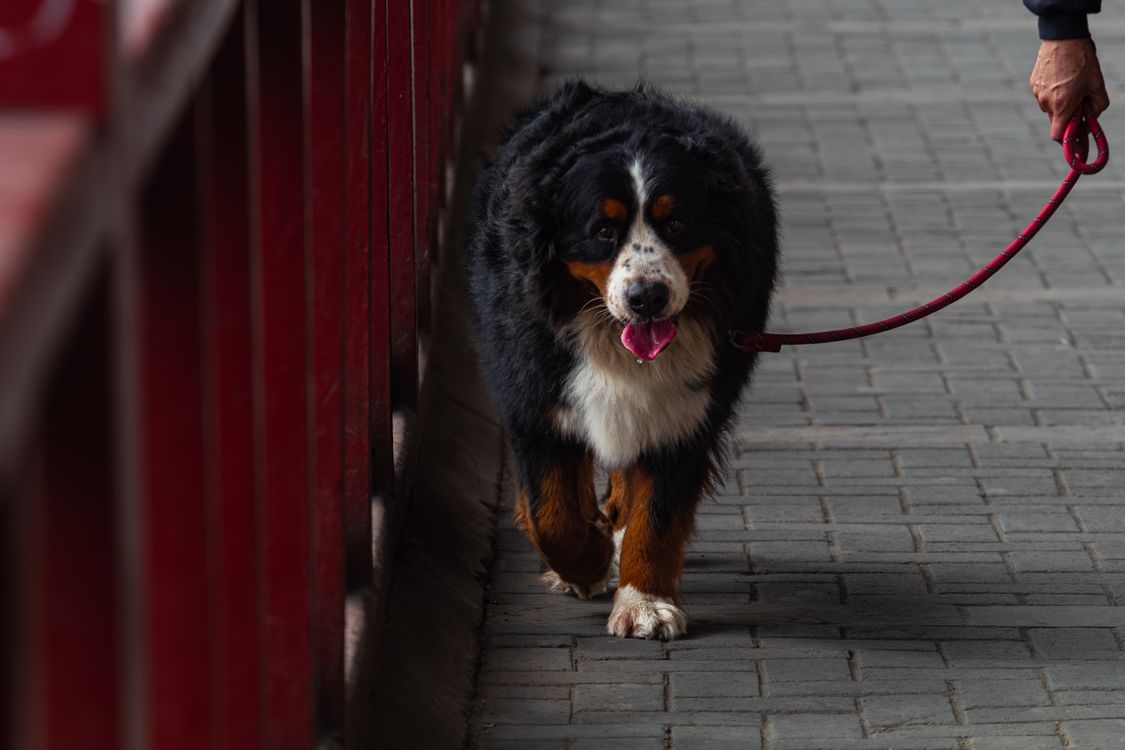
Loose Leash Walking Tips for National Walk Your Dog Week: How to Stop Pulling and Enjoy Every Walk
Picture this: you grab the leash, your dog loses its mind with excitement, and the moment you step out the door, you're being dragged down the sidewalk like a water-skier on concrete. Sound familiar? You're not alone. Leash pulling is one of the most common frustrations dog owners report — and one of the most fixable.
National Walk Your Dog Week (October 1–7) is the perfect motivation to finally address pulling for good. Walks should be the best part of your dog's day — and yours. With the right step-by-step approach, you can transform a chaotic lunge-fest into a calm, connected stroll within weeks.
In this guide, you'll get practical, trainer-approved techniques — from building your dog's attention to proofing calm behavior in distracting environments. No special equipment or prior experience needed.
- As of the 2023–2024 APPA National Pet Owners Survey, 65.1 million U.S. households own a dog — yet leash pulling remains a top-reported behavioral complaint.
- Loose leash walking is built in layers: attention first, technique second, real-world practice third.
- The single most common mistake is inconsistency — allowing pulling sometimes teaches dogs that pulling works.
- High-value treats (small, soft, smelly) dramatically speed up training compared to kibble.
- Most dogs show measurable improvement within 2–3 weeks of daily 10-minute training sessions.
Why Loose Leash Walking Matters More Than You Think

According to the American Pet Products Association (APPA) 2023–2024 National Pet Owners Survey, 65.1 million U.S. households own at least one dog. Yet surveys from veterinary behaviorists consistently place leash pulling among the top three behavior complaints owners bring to professionals — often citing it as a reason walks are skipped entirely.
Skipped walks have real consequences. Dogs who don't get sufficient daily movement and mental stimulation develop secondary behavior problems: destructive chewing, hyperactivity indoors, excessive barking, and anxiety. A walk isn't just exercise — it's enrichment, sniff-time, and social exposure rolled into one.
There's a physical cost, too. A study published in The Veterinary Journal highlighted that dogs who pull on traditional collars experience elevated pressure on the trachea and cervical spine. Over time, this can contribute to neck injury, eye pressure issues, and thyroid gland damage — consequences most owners never connect back to leash behavior.
Loose leash walking is not just a courtesy to passersby — it is a foundation skill that signals to your dog that you are a consistent, predictable leader. According to the Association of Professional Dog Trainers (APDT) resource on how dogs learn, dogs trained through positive reinforcement-based methods show significantly higher retention and generalization of learned behaviors than those trained through correction-based methods, making the reward-first approach both faster and more durable.
What You'll Need Before You Start
You don't need a cabinet full of gadgets. Loose leash walking succeeds or fails on a handful of fundamentals. Get these right before your first training session.
The Right Leash
Use a standard 4–6 ft flat leash. Retractable leashes are training killers — they constantly teach dogs that pulling extends their range. A fixed-length leash gives you consistent feedback and keeps your dog in the training zone.
The Right Collar or Harness
A well-fitted flat collar works for many dogs. For heavy pullers, a front-clip harness (also called a "no-pull harness") redirects the dog's momentum back toward you when they lunge forward. It doesn't punish — it simply makes pulling mechanically less effective. Avoid choke chains, prong collars, and e-collars during the learning phase. They address symptoms, not causes.
High-Value Treats
Training treats should be small (pea-sized), soft, and aromatic. Think cooked chicken, freeze-dried liver, or soft training bites. Save these exclusively for training so they retain their motivational power. Kibble can work for practiced behaviors, but it rarely delivers the dopamine hit needed to compete with the smell of a squirrel.
A Consistent Training Mindset
The biggest variable in loose leash training is the human. Decide now: you will never let the dog pull you to a destination. Not once. The rule must be 100% consistent from day one, or the dog learns that persistence pays off.
✔ 4–6 ft flat or non-stretch leash | ✔ Front-clip harness or flat collar | ✔ Treat pouch | ✔ High-value, soft treats | ✔ Patience (the most important item on this list)
Step 1 — Build Attention: Teach Your Dog to Check In With You
Step 1 of 4
Before your dog can walk nicely beside you, it needs to find you interesting. The world is full of squirrels, smells, and other dogs — you need to be worth glancing at. A 2019 study in Scientific Reports found that dogs who maintain frequent eye contact with their owners during activities show higher oxytocin levels in both parties — meaning attention work literally strengthens the human-dog bond.
Exercise: The Name Game
- Stand in a low-distraction area (your living room or quiet backyard).
- Say your dog's name once in a calm, happy tone.
- The instant they make eye contact — even a glance — say "Yes!" and deliver a treat immediately.
- Repeat 10–15 times per session, twice daily for three to four days.
- Gradually increase the delay before marking (eye contact for 1 second, then 2, then 3).
Exercise: Voluntary Check-Ins on Leash
- Clip the leash and stand still in your yard or driveway.
- Let your dog sniff and wander to the end of the leash.
- Do nothing. Wait. The moment your dog turns back to look at you, say "Yes!" and give a treat.
- You are teaching your dog that checking in with you — entirely on their own — is the most rewarding choice available.
Many handlers rush past attention work because it feels too simple. In practice, dogs that skip this foundation pull again in novel environments because their default is to orient outward — toward the world — rather than toward their person. Three to four days of name-game reps is the highest-ROI investment in loose leash training you can make.
Step 2 — Introduce the "Stop and Stand Still" Technique
Step 2 of 4According to the APDT's guidance on operant conditioning, behaviors that produce no reward will decrease in frequency over time. The Stop and Stand Still technique is a direct application of this principle: pulling stops working instantly. Every single time. This is known as "negative punishment" in behavioral terminology — removing the desired outcome (forward movement) the moment the unwanted behavior (pulling) occurs.
How to Execute the Technique
- Start walking at a normal pace.
- The instant the leash becomes taut — any tension at all — stop completely. Plant your feet. Do not say anything. Do not yank back.
- Wait. Your dog will eventually turn or look back at you. When the leash goes slack and there is eye contact, say "Yes!" and start walking again.
- If your dog doesn't release tension within 10–15 seconds, take one step backward (not a yank — a deliberate step). This creates a gentle physical cue without force.
- Repeat this process every single time the leash tightens.
What to Expect in the First Week
Your first session using this method may only cover half a block in 20 minutes. That is completely normal and a sign the technique is working. Dogs test whether the rule is consistent. After three to five sessions of absolute consistency, most dogs begin self-correcting before the leash goes fully taut — they start to anticipate the stop and slow down.
Step 3 — Use Positive Reinforcement to Build the Loose Leash Habit
Step 3 of 4
Stopping when your dog pulls prevents reinforcing the wrong behavior. But the second, equally important half of the equation is actively rewarding the right behavior. A 2016 study published in Applied Animal Behaviour Science found that dogs trained with reward-based methods displayed fewer stress-related behaviors and higher task engagement than those trained with aversive methods — making sessions more productive and more enjoyable for the dog.
Most owners know to reward a sitting dog. Far fewer reward a dog that is simply walking without tension on the leash. This is the gap. Your dog needs to learn that the loose leash position itself is the jackpot — not just that pulling doesn't work.
The "Magic Spot" Method
- Identify the position you want your dog to maintain: typically beside your left or right knee, leash slack, dog's head at roughly your hip level.
- While walking, every 4–6 steps your dog maintains that position, say "Yes!" and deliver a treat directly at your hip/thigh — not in front of you. Delivering the treat at the target position reinforces being there, not moving ahead.
- Gradually thin the reinforcement schedule: reward every 4–6 steps, then every 8–10, then intermittently (the most durable reinforcement pattern).
Treat Placement Is Everything
Where you deliver the treat determines where your dog wants to be. If you reach in front of your body to hand a treat forward, you are physically pulling the dog out of position. Keep your treat hand at your hip. Make the magic spot the most rewarding place to be on the planet.
Step 4 — Proof the Behavior: Practice in Real-World Distractions
Step 4 of 4
Dogs do not automatically transfer skills learned in your living room to a busy park. This is not stubbornness — it's neuroscience. In a novel environment with higher arousal, the prefrontal processing that supports learned self-control is temporarily overwhelmed. Research in Applied Animal Behaviour Science on canine cognitive load confirms that generalization requires deliberate, graduated exposure across multiple contexts.
This phase is called "proofing" — systematically practicing the behavior in increasingly challenging environments until it holds everywhere.
The Distraction Ladder
Move up only when your dog succeeds at the current level with 80% or better loose-leash compliance:
- Level 1: Quiet hallway or low-traffic backyard (zero distractions)
- Level 2: Quiet residential street (some smells, occasional cars)
- Level 3: Neighborhood with light foot traffic and other dogs visible from a distance
- Level 4: Moderate park or trail (squirrels, cyclists, off-leash dogs at distance)
- Level 5: Busy park, farmers market, or pet store (high foot traffic, food smells, other dogs nearby)
Managing High-Distraction Moments
When you encounter a trigger your dog isn't ready for yet (a squirrel darts across the path mid-Level 3 practice), don't try to enforce the rule in the moment. Instead, increase your distance from the trigger, re-engage attention with a treat, then walk away. You can work on that specific trigger deliberately in a future session. Trying to train through an overloaded brain just rehearses failure.
🐾 Gear Up for National Walk Your Dog Week
The right leash, harness, and training treats make every step of this process easier. Explore a wide selection of quality pet walking essentials designed for comfort and control.
Shop CrossPet Walking Gear →Common Loose Leash Walking Mistakes to Avoid
Even with the best intentions, most owners repeat a handful of predictable errors that stall training. These are the most damaging ones — and how to fix each one.
- ❌ Mistake 1: Inconsistency (Allowing Pulling Sometimes) If pulling is rewarded even 10% of the time — because you were in a hurry, it was raining, or you just felt bad for the dog — you have created a variable reinforcement schedule. This actually makes pulling more persistent, not less. The dog now believes that if it pulls long enough, it will eventually win. Zero tolerance is the only workable standard.
- ❌ Mistake 2: Repeating Commands Saying "heel, heel, HEEL" does not help. It teaches your dog that the command has no real meaning until the third or fourth repetition. Say a cue once. If the dog doesn't respond, move your body (stop, change direction, lure) rather than repeating the verbal cue.
- ❌ Mistake 3: Sessions That Are Too Long Dogs learn better in short, focused bursts. A 10-minute dedicated training walk is more productive than a 45-minute walk where you half-heartedly apply the rules. Two 10-minute sessions per day outperform one long session every time.
- ❌ Mistake 4: Skipping Distraction Proofing Many owners declare victory after the dog walks well in the neighborhood — then wonder why the dog pulls manically at the park. Proofing across environments is not optional. It is the final and essential phase.
- ❌ Mistake 5: Wrong Equipment for the Dog's Stage A back-clip harness on a powerful puller is a sled harness — it physically facilitates pulling. Match your equipment to your dog's current stage: front-clip harness during active training, flat collar or back-clip harness once the behavior is solidly established.
Frequently Asked Questions
How long does it take to teach a dog to walk on a loose leash?
Most dogs show clear improvement within 2–3 weeks of daily 10-minute training sessions, provided the method is applied consistently. A 2023 survey by the APDT found that owners who trained daily with positive reinforcement saw behavioral improvement in under 21 days for most basic skills, including leash manners.
Can older dogs learn to stop pulling?
Yes — dogs of any age can learn loose leash walking. Senior dogs may take slightly longer to unlearn deeply ingrained pulling habits, but their capacity for learning is undiminished. A 2017 study in Animal Cognition confirmed no significant decline in reward-based learning ability in adult dogs versus puppies. Patience and consistency are the key variables, not age.
Should I use a prong collar or choke chain to stop pulling?
Aversive tools such as prong collars and choke chains can suppress pulling in the short term, but a 2021 review in Frontiers in Veterinary Science found they were associated with increased stress, fear, and aggression compared to reward-based approaches. They address the symptom without building the skill — removing the tool typically causes pulling to return immediately.
What if my dog is too distracted to take treats on walks?
Treat refusal during walks almost always means the environment is over-threshold for that dog's current training stage. Step back one level on the distraction ladder and increase treat value (use real chicken or freeze-dried liver instead of kibble). The APDT recommends withholding the high-value treat for training sessions only, so it retains motivational novelty.
Is loose leash walking the same as "heel"?
Not exactly. "Heel" is a formal obedience position — dog tight at your left side, head aligned with your leg, maintaining precision. Loose leash walking simply means the leash has no tension and the dog moves roughly alongside you. Most family dogs thrive with loose leash walking; heel is useful for competitive obedience, therapy dog work, or navigating tight spaces.
The Bottom Line: Every Walk Can Be This Good
Loose leash walking is not a luxury — it's a skill that directly determines how much you and your dog enjoy your time together. National Walk Your Dog Week is a reminder that daily walks are one of the highest-impact things you can do for your dog's physical health and mental wellbeing. The techniques in this guide — building attention, applying the Stop and Stand Still method, rewarding the right position, and proofing in the real world — give you everything you need to make every walk enjoyable.
- Start with attention before you even leave the driveway.
- Stop the moment the leash tightens — every single time, no exceptions.
- Reward the position you want, not just the absence of pulling.
- Graduate distractions slowly; don't expect the dog park to look like the living room.
- Keep sessions short (10 minutes) and consistent (daily).
Need the right gear to make it happen? From durable leashes to comfortable front-clip harnesses and high-quality training treats, CrossPet has everything you need to start National Walk Your Dog Week on the right foot — all four of them.
- American Pet Products Association (APPA) — "2023–2024 APPA National Pet Owners Survey", retrieved 2026-09-21, https://www.americanpetproducts.org/press_industrytrends.asp
- Association of Professional Dog Trainers (APDT) — "How Dogs Learn", retrieved 2026-09-21, https://apdt.com/resource-center/how-dogs-learn/
- Nagasawa, M. et al. — "Oxytocin-gaze positive loop and the coevolution of human-dog bonds", Science, 2015; also covered in Scientific Reports 2019, https://www.ncbi.nlm.nih.gov/pmc/articles/PMC6760027/
- Herron, M.E., Shofer, F.S., Reisner, I.R. — "Survey of the use and outcome of confrontational and non-confrontational training methods in client-owned dogs", Applied Animal Behaviour Science, 2009 / Ziv, G. — "The effects of using aversive training methods in dogs", Journal of Veterinary Behavior, 2017, https://www.sciencedirect.com/journal/applied-animal-behaviour-science
- Cooper, J.J. et al. — "The welfare consequences and efficacy of training pet dogs with remote electronic training collars in comparison to reward based training", PLOS ONE, 2014; updated review in Frontiers in Veterinary Science, 2021, https://www.frontiersin.org/journals/veterinary-science