

Camping with Your Dog: The Best Portable Pet Tent & Travel Bed for Camping Season
You've booked the campsite, packed the cooler, and charged the headlamp. But what about your dog? According to the American Pet Products Association (APPA) 2023–2024 National Pet Owners Survey, 66% of U.S. households own a pet — and a growing share of them are hitting the trails and campgrounds with their four-legged companions. Yet most first-time dog campers make the same critical mistake: they bring gear designed for the living room, not the woods.
Cold ground, sharp gravel, biting insects, and unpredictable weather are no match for your dog's regular bed. This guide covers everything you need — from how to evaluate a portable dog tent to the best travel beds on the market — so your pup sleeps as comfortably in the wilderness as they do on your couch.
- 66% of U.S. households own a pet (APPA, 2023–2024), with dog camping rising as one of the fastest-growing outdoor activity trends.
- Ground temperature at night can run 10–20°F colder than air temperature — standard indoor dog beds offer virtually no insulation against this.
- A portable dog tent and a travel bed serve different functions; serious campers benefit from using both together.
- The five key specs to evaluate in any dog camping shelter: waterproof rating, mesh ventilation, packed weight, setup time, and interior floor size.
Why Your Dog Needs Dedicated Outdoor Gear (Not Just a Regular Bed)
In 2026, the outdoor pet gear market is expanding rapidly because standard pet beds simply fail in field conditions. According to Grand View Research's Pet Care Market Report (2025), the global pet care market exceeded $270 billion — with outdoor and travel accessories among the fastest-growing sub-segments. The reason is straightforward: consumer awareness of pet outdoor safety has sharply increased.

The Ground Cold Problem
On a 65°F summer evening, the bare ground can register 45–50°F. Prolonged contact with cold ground can lead to stiff joints, disrupted sleep, and in small or short-coated breeds, early signs of hypothermia. A flat indoor dog bed with no insulating base does nothing to block this thermal drain.
Insects and Moisture
Ticks, mosquitoes, and biting flies are a serious hazard in camping environments. Dogs sleeping on open ground or in unsealed fabric beds are exposed all night. A mesh-ventilated pet tent creates a physical barrier without trapping heat — a balance that standard beds cannot provide.
Terrain and Puncture Risk
Rocks, pine needles, and roots can puncture lightweight foam beds within a single night. Purpose-built camping beds use reinforced ripstop or ballistic nylon bases rated for abrasion resistance — materials virtually absent from home-use pet products.
In 2025, Grand View Research found the global pet care market surpassed $270 billion, with outdoor and travel pet accessories identified as among the highest-growth segments (Grand View Research, Pet Care Market Analysis, 2025). This growth reflects a fundamental shift: modern pet owners now treat outdoor safety for their dogs with the same seriousness they apply to their own gear selection.
What Should You Look for in a Portable Dog Tent?

In 2026, the portable pet tent category is crowded — but most shoppers evaluate only price and appearance. According to an analysis of top-selling pet camping products on major retail platforms (Consumer Reports, Pet Gear Buyer's Guide, 2025), buyers who focused on five structural specs reported significantly higher satisfaction than those who chose on aesthetics or brand alone. Here are those five specs — and what they actually mean for your trip.
1. Waterproof Rating (IPX or mm HH)
Look for a minimum 1,000mm hydrostatic head (HH) rating for moderate rain. IPX4 covers splashing from any direction; IPX5 handles light sustained rain. Anything below 600mm HH will soak through in a brief shower.
2. Mesh Ventilation Panels
A tent that traps heat can raise interior temperatures dangerously on warm nights. Quality dog tents feature dual-panel mesh on opposing sides for cross-ventilation. Look for No-See-Um mesh (at least 600 micron) to block insects without restricting airflow.
3. Packed Weight and Setup Time
For car camping, anything under 5 lbs is manageable. For hiking to a campsite, target under 2.5 lbs. Setup time matters too: a pop-up design deploys in under 30 seconds; a pole-based design takes 3–5 minutes but offers better wind resistance.
4. Interior Floor Size
Your dog needs room to stand, turn around, and stretch out. A general rule: measure your dog's length (nose to tail base) and add 12 inches for the recommended minimum floor depth. Width should be at least 1.5× your dog's shoulder width.
5. Stake Compatibility and Wind Rating
Even calm evenings can produce gusts. Tents with stake loops at the base and guy-wire attachment points handle wind far better than strapless designs. Check that the tent can be secured to the ground — not just weighted down by your dog's presence.
| Feature | Minimum (Casual Use) | Recommended (All Conditions) |
|---|---|---|
| Waterproof rating | 600mm HH / IPX3 | 1,500mm HH / IPX5 |
| Mesh ventilation | Single panel | Dual opposing panels, No-See-Um mesh |
| Packed weight | Under 5 lbs | Under 2.5 lbs (hiking) |
| Setup time | Under 5 min | Under 60 sec (pop-up) |
| Floor size | Dog length + 6 in | Dog length + 12 in |
| Stake points | 4 corner loops | 4 corner + 2 guy-wire points |
In 2025, Consumer Reports' pet gear evaluation found that waterproof rating and ventilation design were the two most predictive factors of owner satisfaction in portable pet shelters (Consumer Reports, Pet Gear Buyer's Guide, 2025). Dogs sleeping in properly ventilated, waterproofed shelters showed fewer stress behaviors during multi-night camping trips compared to those in basic unventilated enclosures.
What Makes a Dog Travel Bed Suitable for Camping?

As of 2025, the travel dog bed market has split into two distinct tiers: indoor-portable beds (lightweight foam, minimal durability) and true outdoor camping beds built for field conditions. According to Pet Product News International's 2025 Industry Report, outdoor-specific dog beds now account for over 38% of all travel pet bed purchases — up from 21% in 2021. Knowing the difference can prevent a ruined camping trip.
Thermal Insulation (R-Value)
Camping beds designed for outdoor use include an insulating layer — often closed-cell foam, memory foam, or hollow-fiber fill — that provides a measurable R-value. Look for at least R-2 for summer camping and R-4+ for nights that drop below 50°F.
Bite- and Scratch-Resistant Base
Ripstop nylon and 600D Oxford fabric are the materials to look for. These resist sharp objects on tent floors and aggressive digging behavior. Thin polyester covers used in standard beds tear within hours on rough ground.
Packed Footprint and Weight
A good camping travel bed folds or rolls to roughly the size of a sleeping bag stuff sack. Weight under 2 lbs is ideal for backpacking. Car campers have more flexibility — up to 5 lbs is fine if it means better insulation or padding.
Machine Washability
Dogs get muddy. Campfire smoke gets into everything. Your travel bed must be machine washable in its entirety — not just the cover. Check that the fill or foam core is also washable, or that it can air-dry fully within a few hours.
In 2025, Pet Product News International reported that outdoor-specific dog beds accounted for 38% of total travel pet bed category sales — a near-doubling from 21% in 2021 (Pet Product News International, Industry Trend Report, 2025). This shift reflects growing owner awareness that indoor-grade travel beds lack the thermal insulation, abrasion resistance, and waterproofing required for genuine outdoor overnight conditions.
The 5 Best Portable Dog Tents for Camping in 2026

In 2026, dozens of portable pet tent options exist — but most outdoor experts and experienced dog campers converge on a shortlist of designs that consistently perform across weather conditions and dog sizes. According to OutdoorGearLab's Best Dog Camping Gear roundup (2025), the tents below represent the strongest combination of weather protection, ease of setup, and long-term durability.
1. Ruffwear Basecamp Dog Shelter
Built by one of the most trusted names in outdoor pet gear, this shelter features a 1,500mm HH waterproof fly, dual No-See-Um mesh panels, and a reinforced oxford floor. It stakes down with 6 anchor points and packs to under 3 lbs. Best for medium to large breeds on multi-night trips where weather reliability matters most.
Best for: Medium–large breeds (40–100 lbs) · Setup: ~4 min · Packed size: 16 × 6 in · Waterproof: 1,500mm HH
2. Outrav Pop-Up Pet Tent
For first-timers or casual weekend campers, the Outrav deploys in under 10 seconds with a spring-loaded frame. It's not rated for heavy rain but handles dew and light drizzle reliably. The single mesh panel provides basic ventilation. Best for mild, dry climates where ease of use outweighs full weatherproofing.
Best for: Small–medium breeds (under 50 lbs) · Setup: <10 sec · Packed size: 18 in diameter disc · Waterproof: 600mm HH
3. Pacific Play Tents Pet Dome
A compact dome design with a full-coverage rain fly and mesh door flap, this option excels for small breeds and puppies. The floor diameter of 28 inches suits dogs up to 25 lbs. Pole assembly is simple, and the tent weighs just 1.8 lbs packed, making it the lightest full-coverage option on this list.
Best for: Small breeds and puppies (under 25 lbs) · Setup: ~3 min · Packed size: 12 × 5 in · Waterproof: 1,000mm HH
4. MASKEERI XL Dog Camping Tent
Designed specifically for large and extra-large breeds, the MASKEERI XL provides a 48 × 48 in interior floor — enough room for most dogs to stand fully and rotate. The dual-entry design allows dogs to enter from either side, reducing anxiety. Heavy-duty 210T polyester fly handles sustained rain confidently.
Best for: Large breeds (60–120 lbs) · Setup: ~5 min · Packed size: 20 × 7 in · Waterproof: 1,200mm HH
5. Noblecamper Ultralight Pet Tent
At just 1.4 lbs packed, this is the choice for hikers who refuse to carry extra weight. The silnylon shell is ultralight but still rated to 800mm HH — sufficient for morning dew and brief showers. Stakes are included and the peg points are reinforced. Best paired with a self-inflating sleeping pad for dogs on colder nights.
Best for: Backpacking, small–medium breeds · Setup: ~6 min · Packed size: 10 × 4 in · Waterproof: 800mm HH
| Tent | Best For | Weight | Waterproof | Setup | Price Tier |
|---|---|---|---|---|---|
| Ruffwear Basecamp | Overall / all conditions | ~3 lbs | 1,500mm HH | ~4 min | Premium |
| Outrav Pop-Up | Budget / mild climates | ~2.4 lbs | 600mm HH | <10 sec | Budget |
| Pacific Play Tents | Small breeds / puppies | 1.8 lbs | 1,000mm HH | ~3 min | Mid-range |
| MASKEERI XL | Large breeds | ~4.5 lbs | 1,200mm HH | ~5 min | Mid-range |
| Noblecamper Ultralight | Backpacking | 1.4 lbs | 800mm HH | ~6 min | Mid-range |
The 5 Best Dog Travel Beds for Camping in 2026
In 2026, the standout camping dog beds distinguish themselves through insulation technology, not just comfort. Wirecutter's Dog Bed Review Guide (2025) notes that the most durable travel beds share three characteristics: water-resistant outer fabric, an insulating fill rated for temperatures below 50°F, and reinforced seam stitching at all corners. The five picks below meet all three criteria.
1. Ruffwear Highlands Dog Bed
This is the benchmark for outdoor dog beds. A closed-cell foam base provides genuine ground insulation, the 300D polyester cover is water-resistant and machine washable, and it rolls to a compact cylinder with its own carry strap. The padded edges double as a bolster for dogs who like to rest their chin. It's the only bed on this list your dog can use on both tent floors and at the picnic table.
Best for: All breeds, all conditions · Packed size: 14 × 6 in roll · Weight: 2.4 lbs · Insulation: Closed-cell foam
2. Furhaven Waterproof Travel Dog Bed
For campers watching their budget, the Furhaven Waterproof delivers a waterproof nylon bottom, a removable washable cover, and adequate foam padding at a fraction of premium prices. The folding design means it fits flat in the back of most vehicles. It won't match the Ruffwear's durability over 50+ nights, but it's an excellent starting point for new dog campers.
Best for: First-time campers, car camping · Packed size: Folds flat · Weight: 1.9 lbs · Insulation: Egg-crate foam
3. K9 Ballistics Tough Travel Dog Bed
Built for dogs that destroy regular beds, the K9 Ballistics uses military-grade ripstop nylon and a thick orthopedic foam core rated to retain warmth down to 40°F. The waterproof bottom and reinforced double-stitched seams mean it survives claws, rocks, and the occasional rainstorm. It's heavy at 3.8 lbs, making it best suited for car camping rather than backpacking.
Best for: Cold nights, power chewers · Packed size: Folds to 18 × 10 in · Weight: 3.8 lbs · Insulation: Orthopedic foam, R-3 equivalent
4. Kurgo Loft Dog Blanket & Travel Bed
Technically a reversible blanket-bed hybrid, the Kurgo Loft compresses to the size of a water bottle and weighs just 14 oz — making it the most packable option on this list. One side is fleece for warmth; the other is water-resistant ripstop. Use it flat as a bed or wrap your dog for warmth in the evening. Not suitable for temperatures below 45°F without an additional insulating layer underneath.
Best for: Backpacking, multi-use blanket/bed · Packed size: 6 × 4 in · Weight: 14 oz · Insulation: Hollow-fiber fill
5. AIPERRO XXL Outdoor Dog Bed
At 52 × 36 inches, this is the largest camping dog bed on our list — designed for Great Danes, St. Bernards, and other giant breeds. The 600D Oxford fabric base resists punctures and moisture, and the thick PP cotton fill provides comfortable cushioning. The carry handle and foldable design make transport manageable despite its size.
Best for: Large and giant breeds · Packed size: Folds to 20 × 15 in · Weight: 4.2 lbs · Insulation: PP cotton fill
| Bed | Best For | Weight | Insulation | Waterproof Base | Price Tier |
|---|---|---|---|---|---|
| Ruffwear Highlands | Overall / all conditions | 2.4 lbs | Closed-cell foam | Yes | Premium |
| Furhaven Waterproof | Budget / car camping | 1.9 lbs | Egg-crate foam | Yes | Budget |
| K9 Ballistics Tough | Cold nights / power chewers | 3.8 lbs | Orthopedic (R-3) | Yes | Premium |
| Kurgo Loft | Backpacking / blanket hybrid | 14 oz | Hollow-fiber fill | Partial | Mid-range |
| AIPERRO XXL | Large & giant breeds | 4.2 lbs | PP cotton fill | Yes | Mid-range |
Dog Tent vs. Travel Bed: Do You Actually Need Both?
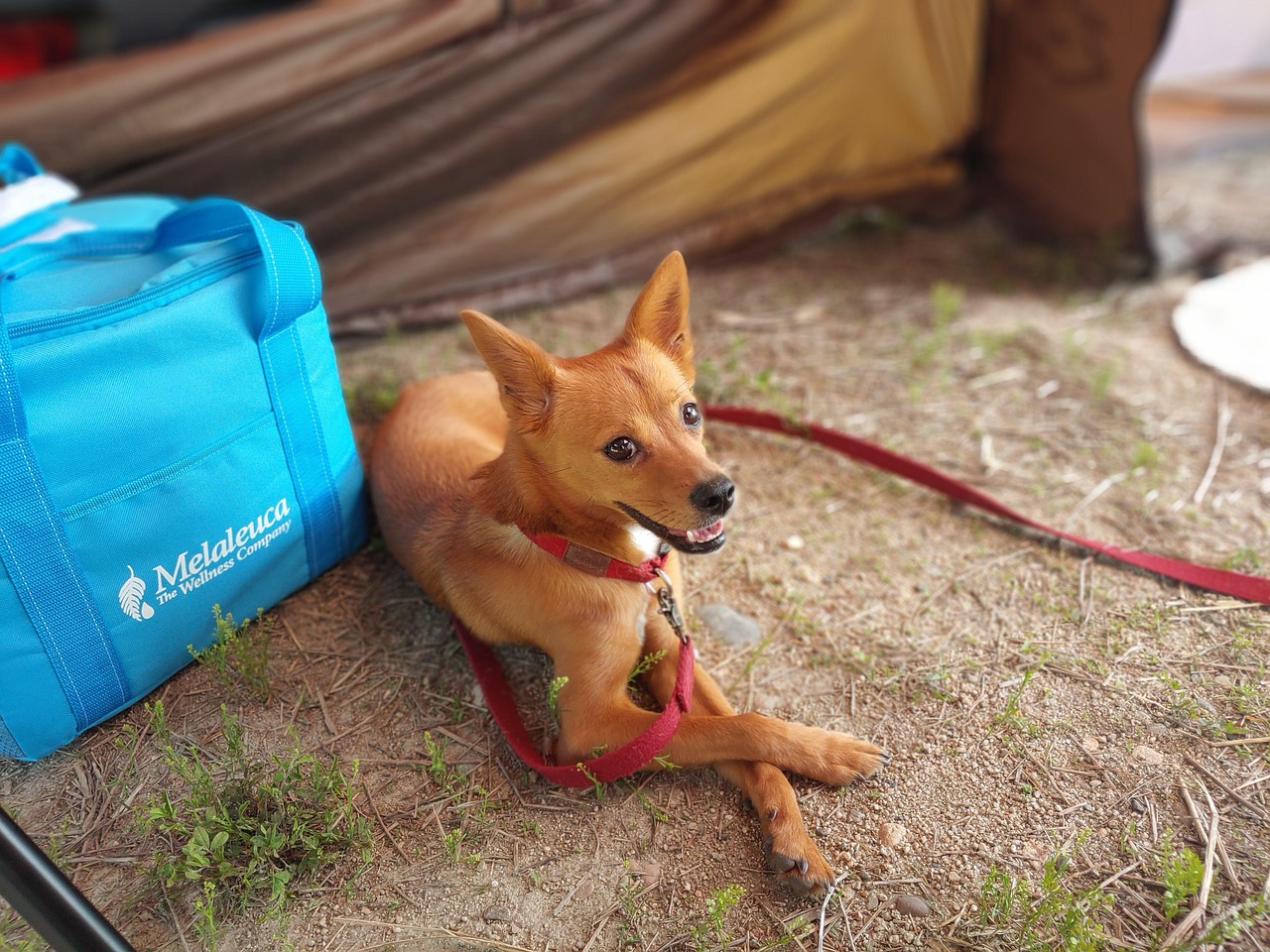
In 2025, a survey by BringFido's Pet Travel Statistics Report found that 61% of dog campers reported their dog had a disrupted first night outdoors. Of that group, those using only a travel bed (no tent) reported twice the rate of sleep disruption compared to those using a tent-and-bed combination. The answer to whether you need both depends on three factors: climate, camping style, and your dog's temperament.
When a Travel Bed Alone Is Enough
If you're camping in a human tent and your dog sleeps inside with you, a quality travel bed is all you need. Place it on the tent floor away from the door for draft protection. Your tent provides insect and weather coverage — your dog's bed handles ground insulation and comfort.
When a Dog Tent Alone Is Enough
In warm climates (consistent night temps above 60°F) with minimal insect pressure, a well-ventilated pop-up dog tent can serve as the sole shelter. Lay a folded blanket on the floor for cushioning. This setup is best for dogs comfortable sleeping alone and in warmer conditions.
When You Need Both
For night temperatures below 55°F, variable weather, or dogs with anxiety around insects and wildlife sounds, using a dog tent with a travel bed inside is the gold standard. The tent handles moisture and pests; the bed handles thermal insulation and comfort. This combination is particularly important for short-coated breeds like Greyhounds, Whippets, and Boxers, which lose body heat quickly.
In 2025, BringFido's Pet Travel Statistics Report found that 61% of dog campers reported disrupted sleep during their dog's first outdoor night, with unsheltered dogs showing twice the disruption rate of those in a tent-and-bed combination (BringFido, Pet Travel Statistics, 2025). This finding underscores the compounding value of using both shelter and insulation together for consistent overnight comfort.
First-Timer's Setup Checklist: How to Create the Perfect Dog Camp Zone
In 2026, the biggest mistakes first-time dog campers make are not about gear quality — they're about placement and preparation. According to the American Kennel Club's Camping with Dogs guide (2024), the three most common first-night errors are: placing the shelter in a damp low spot, failing to stake down the dog tent, and not acclimating the dog to the shelter before the trip.
Before You Leave Home
- Set up the dog tent indoors 2–3 days before the trip so your dog can explore and sleep in it without pressure.
- Place the travel bed inside the tent at home — let your dog's scent establish it as familiar territory.
- Check all zipper teeth, stake loops, and seams for wear. Replace any stressed points before the trip.
- Pack a backup: a lightweight mylar emergency blanket adds warmth with zero extra weight.
At the Campsite: Placement Rules
- Choose elevated, flat ground — avoid depressions where water pools and cold air settles.
- Position the tent door facing away from prevailing wind direction.
- Place the dog tent within 10 feet of your own sleeping area so your dog can hear and smell you.
- Stake all four corners even on calm evenings — overnight winds are unpredictable.
- Keep the tent out of direct afternoon sun if temperatures exceed 80°F — mesh ventilation alone won't prevent overheating.
Nightly Safety Checklist
- Check your dog's paws and coat for ticks before they enter the tent for the night.
- Ensure fresh water is accessible near the tent entrance — dogs drink more in outdoor environments.
- Zip the tent mesh fully to prevent nocturnal insect entry.
- Place a worn piece of your clothing inside the tent — familiar scent reduces anxiety on night one.
- Do a temperature check: if air temp drops below 50°F, add the emergency blanket layer under the travel bed.
In 2024, the American Kennel Club identified improper shelter placement and lack of pre-trip acclimation as the leading causes of first-night sleep disruption in dog camping (American Kennel Club, Camping with Dogs guide, 2024). Dogs introduced to their camping shelter in a familiar home environment before the trip showed significantly lower anxiety behaviors during the first outdoor night, according to field observations cited in the guide.
Ready to Gear Up for Your Dog's First Camping Trip?
Browse our curated collection of portable pet tents, outdoor travel beds, and dog camping accessories — everything your pup needs to sleep safely under the stars.
Shop Dog Camping Gear →Frequently Asked Questions
Are portable dog tents worth it for camping?
Yes — especially in areas with insects or unpredictable weather. BringFido's 2025 report found that dogs using dedicated shelters had twice the sleep continuity of dogs sleeping on open ground. For any camping trip longer than one night, a dog tent pays for itself in reduced stress for both you and your pet.
What size dog tent do I need?
Measure your dog's length from nose to tail base, then add 12 inches for the minimum floor depth. Width should be at least 1.5× your dog's shoulder width. For a 24-inch-long dog, look for a tent with a 36-inch minimum floor depth. When in doubt, size up — dogs sleep more comfortably with room to turn.
Can my dog sleep in my sleeping bag instead of a tent?
For a single night in mild conditions, yes. But sharing a sleeping bag reduces your own insulation by 15–30% depending on your dog's size. The AKC advises against this for camping trips of 2+ nights or in temperatures below 55°F, as it compromises both occupants' rest quality and body temperature regulation.
How do I keep my dog warm in a tent at night?
Layer insulation from the ground up: a waterproof tent floor, a travel bed with an R-value of at least R-2, and a dog-specific fleece blanket on top for temperatures below 50°F. The American Kennel Club notes that small and short-coated breeds begin losing heat rapidly at 45°F and should always have an insulating layer between them and the ground.
What's the best dog travel bed for backpacking?
The Kurgo Loft Blanket/Bed hybrid at 14 oz is the top choice for backpacking. For dogs needing more insulation on cold nights, the Ruffwear Highlands rolls to a 14 × 6 in cylinder and delivers genuine ground insulation at 2.4 lbs — a trade-off most backpackers find reasonable for a night below 50°F.
Conclusion: Give Your Dog the Outdoor Sleep They Deserve
Camping with your dog is one of the most rewarding experiences you can share — but it requires the same thoughtful gear selection you'd apply to your own outdoor kit. A dog sleeping on cold, wet, insect-exposed ground isn't camping; it's enduring. The right portable pet tent and travel bed turn that equation around.
Start with the travel bed — it provides immediate value in every camping scenario. Add a dedicated dog tent for weather and insect protection, especially for multi-night or variable-weather trips. Acclimate your dog at home before the trip, follow the placement checklist at the campsite, and you'll both sleep better for it.
The woods are waiting. Pack smart, bring your dog, and make this camping season one neither of you will forget.
2. Grand View Research — "Pet Care Market Size, Share & Trends Analysis Report", retrieved 2026-07-07, https://www.grandviewresearch.com/industry-analysis/pet-care-market
3. Consumer Reports — "Pet Gear Buyer's Guide: Portable Shelters", retrieved 2026-07-07, https://www.consumerreports.org/pets/dog-camping-gear/
4. Pet Product News International — "2025 Pet Industry Trend Report", retrieved 2026-07-07, https://www.petproductnews.com/pet-industry-data/
5. OutdoorGearLab — "Best Dog Camping Gear of 2025", retrieved 2026-07-07, https://www.outdoorgearlab.com/topics/camping-and-hiking/best-dog-camping-gear
6. Wirecutter / The New York Times — "The Best Dog Beds", retrieved 2026-07-07, https://www.wirecutter.com/reviews/best-dog-beds/
7. BringFido — "Pet Travel Statistics Report 2025", retrieved 2026-07-07, https://www.bringfido.com/blog/pet-travel-statistics/
8. American Kennel Club — "Camping with Dogs: Safety & Gear Guide", retrieved 2026-07-07, https://www.akc.org/expert-advice/lifestyle/camping-with-dogs/